THE MINE THAT CHANGES EVERYTHING — AND WON'T OPEN UNTIL 2030
Canada just greenlit the world's next uranium giant. Here's why the four-year wait is the most bullish signal uranium investors have seen in a decade.

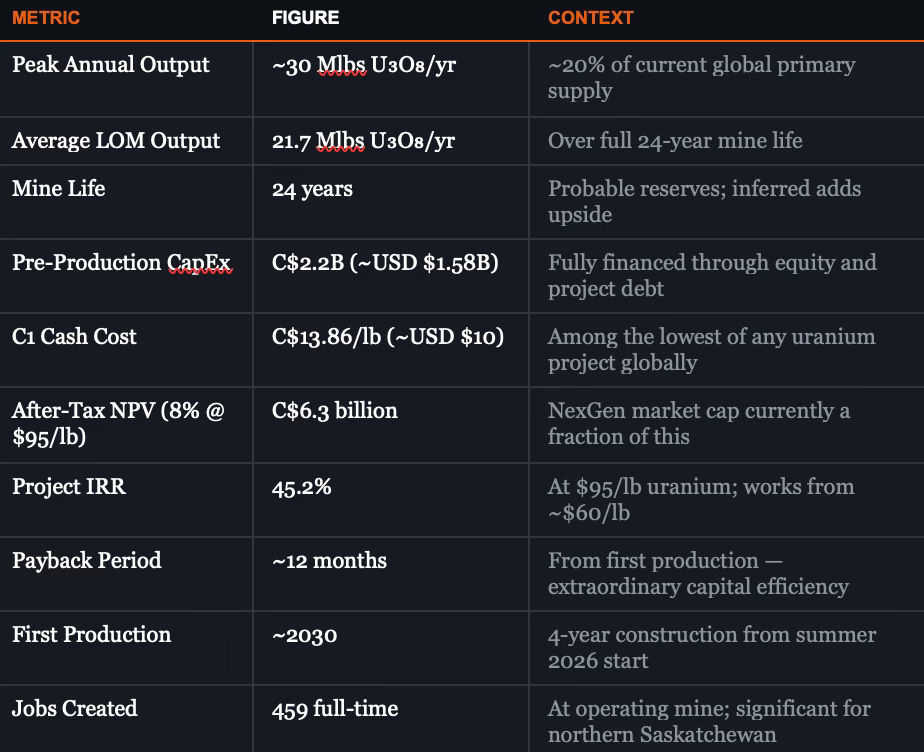
Picture this: the world is burning 180 million pounds of uranium every year. Mines are only producing 140–150 million pounds. That gap — 30 to 40 million pounds of annual deficit — gets papered over by drawing down stockpiles that are not going to last forever.
Now imagine someone finally breaks ground on the mine that could fix that problem.
The catch? It won’t produce a single pound until 2030.
That’s not a problem. That IS the bull case.
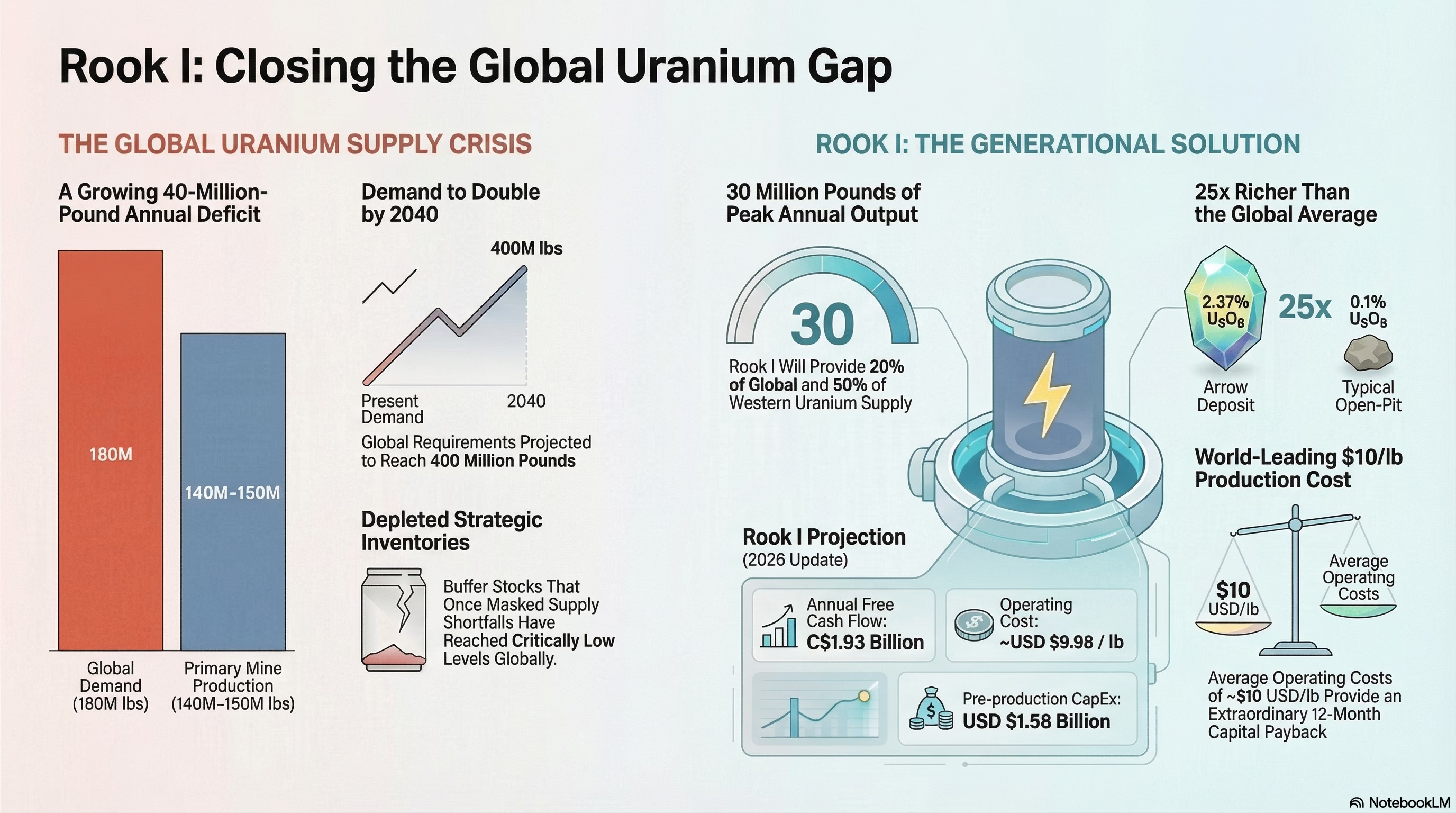
On March 5, 2026, Canada’s nuclear regulator — the most rigorous in the world — issued the final construction licence for NexGen Energy’s Rook I uranium project in northern Saskatchewan. Within hours, NexGen announced a Final Investment Decision. Shovels go in the ground this summer.
This is the largest development-stage uranium deposit in Canadian history. And if you understand what it means for the next four years of uranium prices, you’ll see why this approval is one of the most significant events the uranium market has seen in a decade.
01 | WHAT JUST HAPPENED
After more than a decade of exploration and a multi-year regulatory process — including public hearings with Indigenous community testimony in both Gatineau, Quebec (November 2025) and Saskatoon, Saskatchewan (February 2026) — Canada’s Canadian Nuclear Safety Commission (CNSC) granted the final required approval for NexGen Energy’s Rook I Project.
This was not a rubber stamp. The CNSC is one of the toughest nuclear regulators on the planet. When it says yes, institutions and utilities around the world take notice.
NexGen immediately announced a Final Investment Decision. Construction begins summer 2026. First production is targeted for approximately 2030. The project sits in the Athabasca Basin of northern Saskatchewan — the same geological belt that produced Cigar Lake and McArthur River, the two highest-grade uranium mines ever operated anywhere on Earth.
02 | THE ARROW DEPOSIT — WHY THIS IS NOT A NORMAL MINE
Arrow is not just large. It is anomalously, almost absurdly high-grade.
The average open-pit uranium mine grades around 0.05–0.10% U₃O₈. Arrow’s measured and indicated resource grades at 3.10% — that is 25 to 40 times richer than the global average. There is almost no equivalent on Earth outside the Athabasca Basin itself.
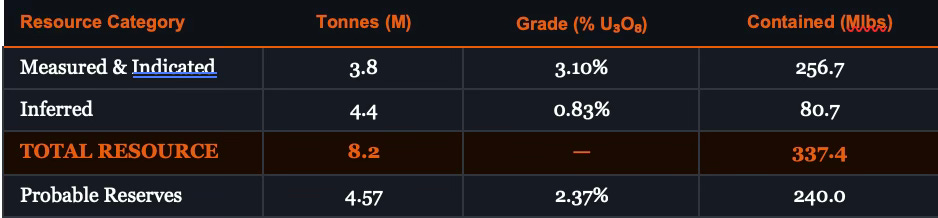
Mineralisation begins just 100 metres below the surface and extends to 950 metres depth — entirely within stable crystalline basement rock. In early 2026, NexGen also announced a brand new uranium discovery 3.5 km from Arrow. The resource story here is not finished.
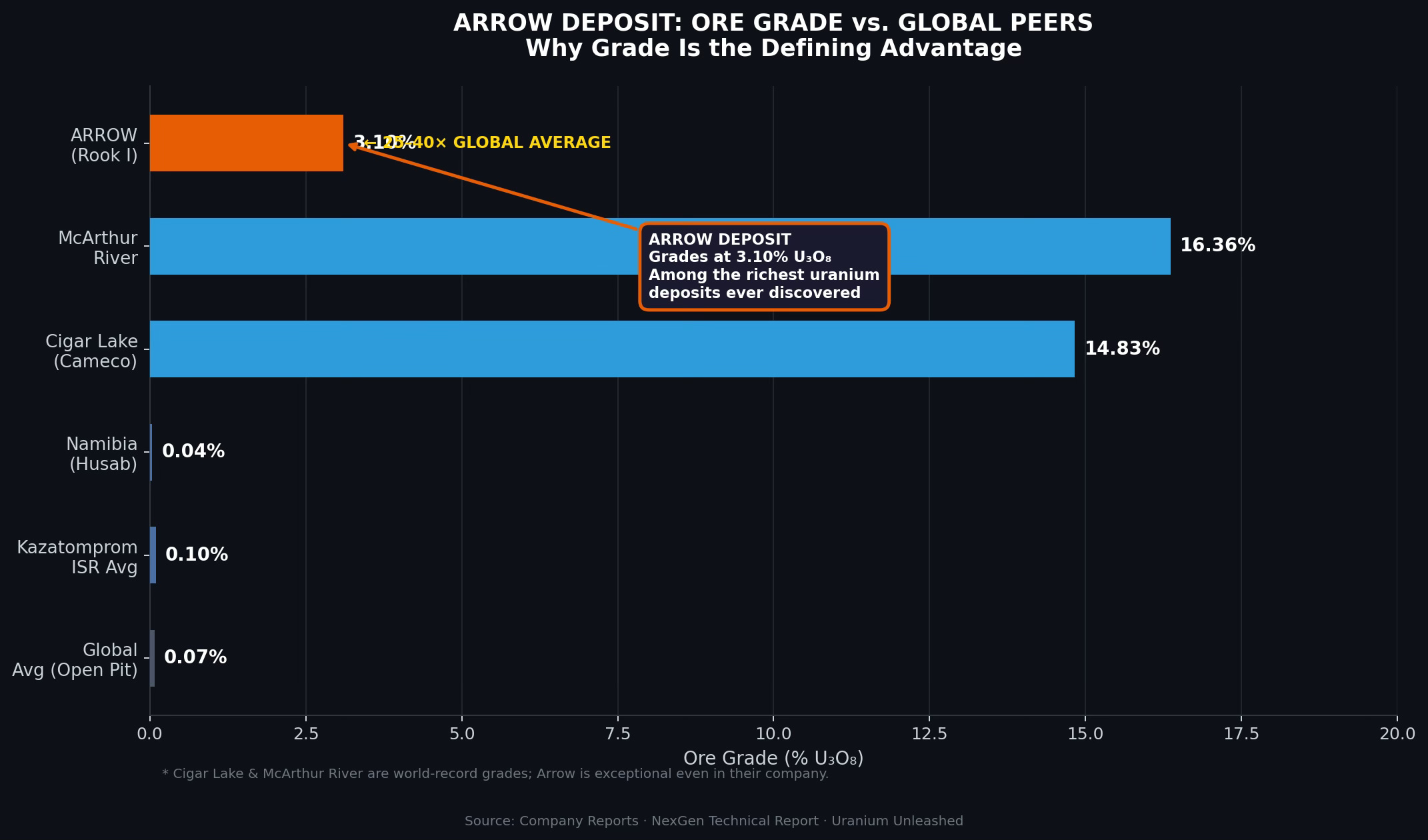
▲ Arrow’s ore grade vs. global peers — 25–40× richer than the open-pit average
03 | KEY PROJECT METRICS AT A GLANCE