

THE STRATEGIC PAUSE (PART III) - The Vertical Stack
How China Built Infrastructure, Equipment, and Fuel-Cycle Leverage Across the Entire AI–Nuclear Value Chain — and What It Means for the United States

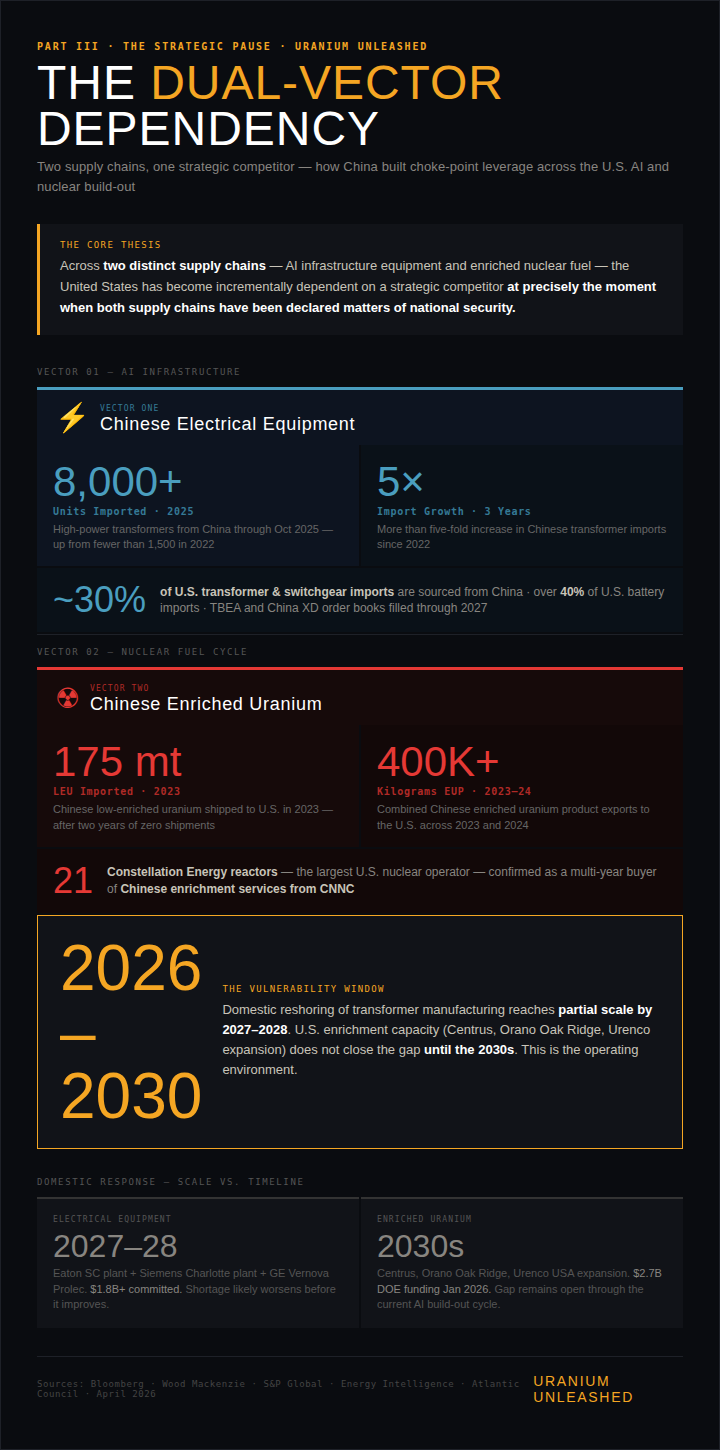
The first two reports in this series documented the constraints holding back the United States’ AI and nuclear build-out. The Strategic Pause: Infrastructure Realignment in the AI–Nuclear Nexus described how grid bottlenecks, electrical equipment shortages, and political headwinds are forcing 30–50% of planned 2026 U.S. data center capacity into delay or cancellation. The Strategic Pause: Nuclear Impact Assessment traced how that pause cascades through the nuclear fuel cycle — softening near-term enrichment urgency, slowing utility contracting, and extending the period during which the United States remains dependent on foreign suppliers for the fuel that runs its existing reactor fleet.
This report — the third in the series — turns the lens outward. While the United States contends with its own infrastructure constraints, China has built itself into a position of structural leverage across the entire AI–nuclear value chain. That leverage is not the result of a single policy success. It is the cumulative outcome of two decades of vertical integration: domestic power generation built ahead of demand, reactor construction at industrial pace, indigenous enrichment capacity scaled to sovereign needs, and dominance of the global market for the electrical equipment on which every data center build-out depends.
Keep reading with a 7-day free trial
Subscribe to Uranium Unleashed to keep reading this post and get 7 days of free access to the full post archives.